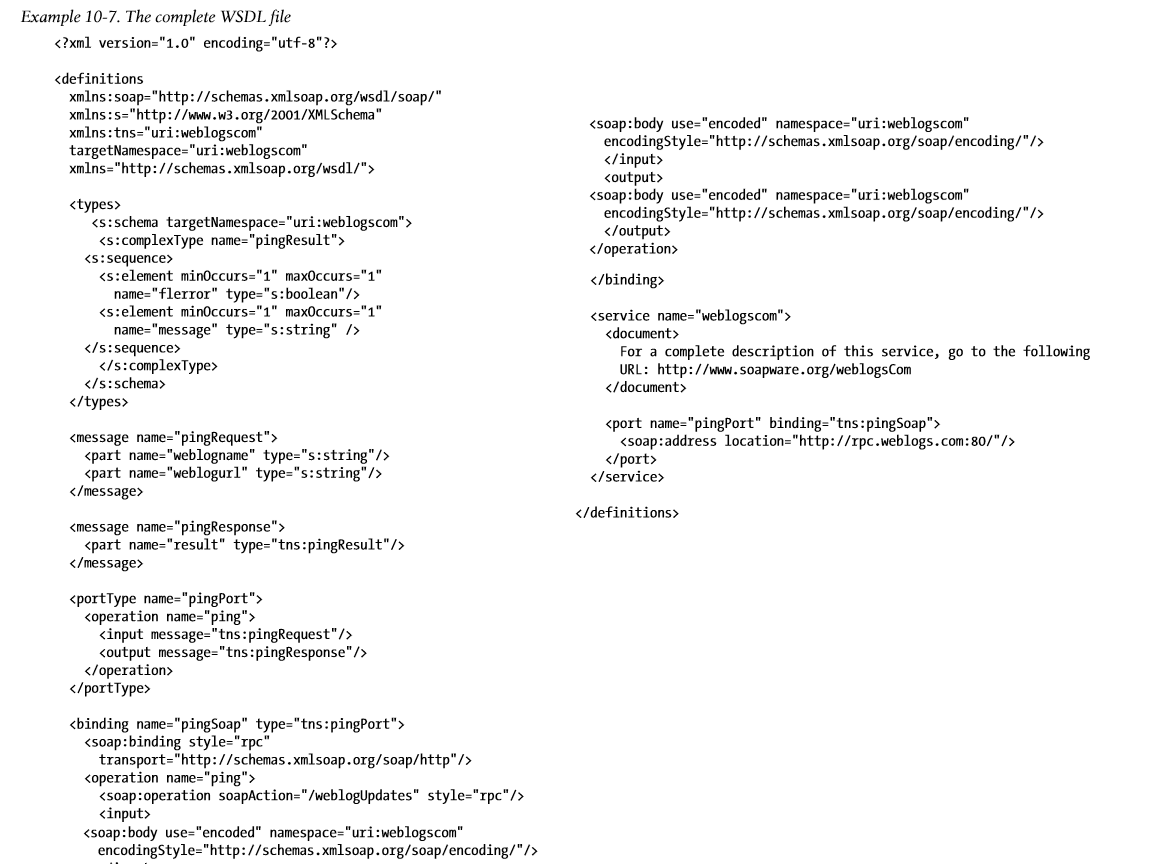
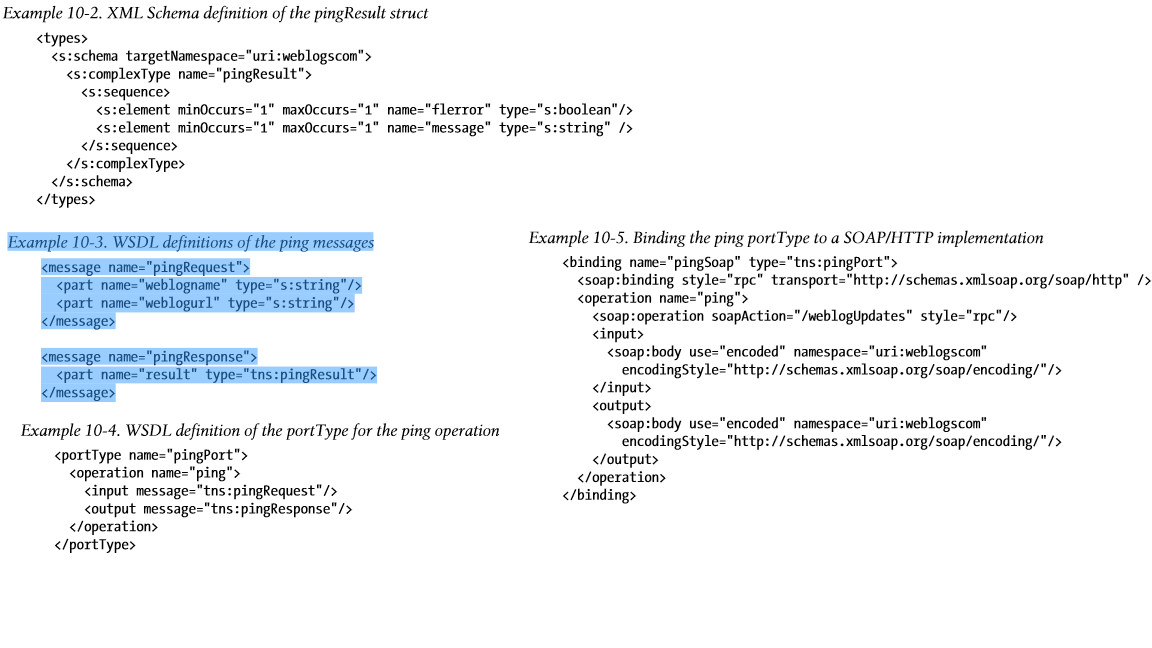
WSDL The Web Service Description Language (WSDL) is an XML vocabulary used to describe SOAP-based web services. A client can load a WSDL file and know exactly which RPCstyle methods it can call, what arguments those methods expect, and which data types they return.
WADL The Web Application Description Language (WADL) is an XML vocabulary used to describe RESTful web services. As with WSDL, a generic client can load a WADL file and be immediately equipped to access the full functionality of the corresponding web service.
WADL The Web Application Description Language is an XML vocabulary for expressing the behavior of HTTP resources (see the development site for the Java client (https:// wadl.dev.java.net/)). It was named by analogy with the Web Service Description Language, a different XML vocabulary used to describe the SOAP-based RPC-style services that characterize Big Web Services.
For RESTful and hybrid services, it’s recommend using the Web Application Description Language. A WADL file describes the HTTP requests you can legitimately make of a service: which URIs you can visit, what data those URIs expect you to send, and what data they serve in return. A WADL library can parse this file and model the space of possible service requests as a native language API.
The del.icio.us and Flickr APIs are good examples of hybrid services. They work like the Web when you’re fetching data, but they’re RPC-style services when it comes time to modify the data.
Another defining feature of a RESTful architecture is its use of HTTP response codes. If you send a request to S3, and S3 handles it with no problem, you’ll probably get back an HTTP response code of 200 (“OK”), just like when you successfully fetch a web page in your browser.
S3 uses a variety of response codes in addition to 200 (“OK”) and 404 (“Not Found”). The most common is probably 403 (“Forbidden”), used when the client makes a request without providing the right credential
 Sanae BEKKAR - My Blog -
Laisser un commentaire